
 The only Shopify integration that holds volatile orders on purpose
Stop letting Shopify's chaos
hit your warehouse floor.
Every paid Shopify order enters a controlled release window before your WMS sees it. Edits, cancellations, address changes, and fraud holds get resolved inside the window - so your pickers only ever see validated, ready-to-pick orders.
Onboarding a new brand stops being an integration project. They self-install from the Shopify App Store, and we track Shopify's API so nobody on your team has to.
A diagnostic, not a demo. You keep the report either way.
The 5% of Orders That Cause 80% of Your Pain
Normal orders aren't the problem. The edge cases are. Shopify lets merchants edit, cancel, change addresses, and fix SKU mistakes long after the order's in your WMS. That's when it starts costing you money.
Without a Volatility Buffer
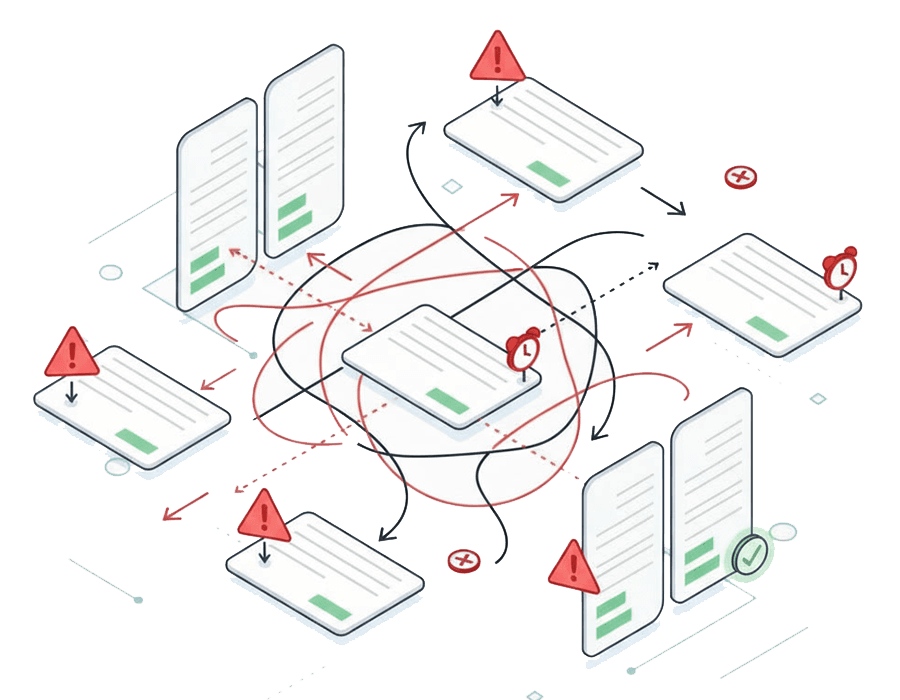
Dirty WMS data. Rework. And it's your fault, apparently.
With OrderShifter
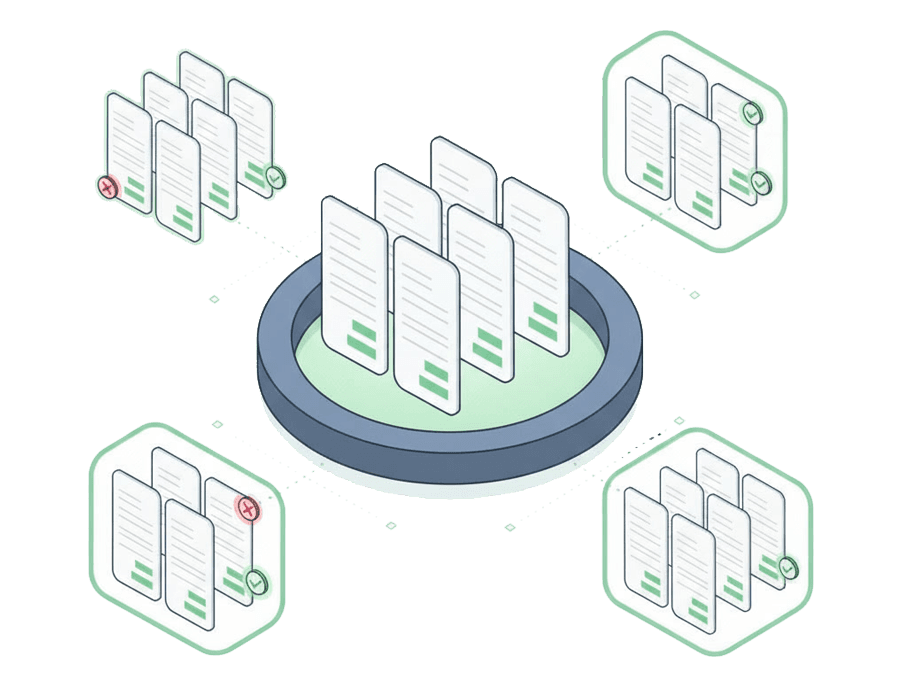
Calmer days. Clean data. Your reputation stays intact.
Run the math on your own volume
We'd rather show you where the numbers come from than ask you to trust them. Sources are named below, and the two figures we assume rather than source are labelled as assumptions.
Measured, with sources
- 2.1% of Shopify orders are edited after checkoutRevize, across a 7.6M-order Shopify corpus. Address-change requests alone run 2-5%.
- $20.50-$24 per bad address in carrier correction feesUPS and FedEx published rate cards. Failed deliveries average $17.20 on top (Loqate).
- $22-$100 per mis-pick, plus $3-$12 of agent time per contactPublished warehouse-error and support-cost benchmarks.
- $10-$68 all-in per volatile orderOur composite of the three lines above - triage labor, re-picks, reships, escalations - not a single observed figure.
What it adds up to
$5,000-$20,000/month
Modeled for a mid-size 3PL pushing 30-50K Shopify orders a month: labor you don't pay for, mistakes you don't eat, merchants you don't lose
You pay: $399-$1,499/month
If the math holds on your volume, the payback window is measured in weeks.
What we assume, not measure
- A $40/hour blended ops labor rate.
- 5-10 hours a week of manual tracking entry while the fulfillment loop stays open. This one is our estimate from working the merchant side, not a published figure.
Your volume, merchant mix and current process move the whole range. The Audit replaces every number here with yours.
Don't take our word for any of this. A free Volatility Audit measures your real numbers - volatility rate, top exception patterns, and what it's costing you - before you pay anything.
Get your free Volatility AuditShopify order in, clean order out. Four steps.
You watch the queue. We handle the plumbing.
Step 1 - Smart Hold Window
Orders sit briefly while Shopify finishes whatever it's doing. Window is configurable per merchant or product type.

Step 2 - Exception Gate
Addresses, SKUs, inventory, business rules - all checked before the order moves forward.

Step 3 - Resolve + Approve
Exceptions land in one prioritized queue, each with a clear next action. Fix them here before they become tickets.

Step 4 - Clean Export to WMS
Only orders marked WMS-ready get released. Every change up to that point is in the audit trail.
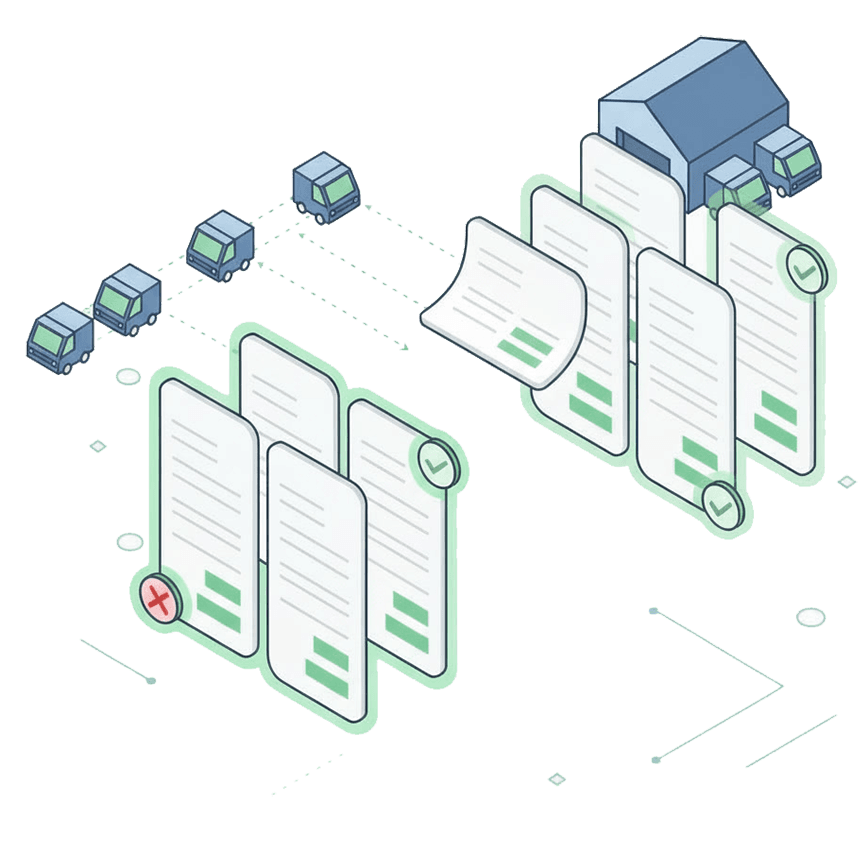
Built for the people who actually feel the pain
We built OrderShifter around what 3PL ops look like on a Tuesday afternoon. Not what they look like on a slide.
The Firefighting Ops Director
VP/Director of Operations
You're stuck in reactive mode. Late order changes blow your SLAs, and somehow it ends up on your desk.
What you get:
Orders that hit the WMS are final and clean. Days get quieter.
The Overwhelmed Warehouse Manager
Fulfillment/Warehouse Manager
Re-picks. Chasing down edits. Explaining mis-ships that weren't your team's fault. You're done.
What you get:
A queue of orders ready to ship. Nothing in it to chase.
The Integration-Fatigued IT Lead
Technical/Solutions Lead
You're holding together brittle custom scripts that break every time Shopify ships a change or a merchant adds a new app.
What you get:
A managed integration layer. We push the updates. You stop being the bottleneck.
The Client-Focused 3PL Owner
Founder/General Manager
You know ops is your real edge. You also know a competitor with sharper tech can quietly walk off with one of your bigger merchants.
What you get:
Happier merchants. Fewer escalations. A reason for them to stay when the next pitch lands in their inbox.
Walk into a pitch with your own Shopify app.
When a brand asks how you integrate with Shopify, the answer stops being a mapping call and a developer's invoice. It becomes "here's our app, click install" - live in one OAuth flow, with a portal carrying your name, not ours. The 3PL with an engineering team has been able to say that for years. Now so can you.
Northgate Fulfillment Portal
powered by OrderShifter
Order #4471 - Address incomplete
Missing apartment number. Fix it here and it ships today.
Order #4468 - SKU not recognized
"BUNDLE-SPRING" isn't on the approved list. Map it or swap it.
Order #4459 - Address corrected
Resolved by you 12 minutes ago. Released to the warehouse.
This is the part 3PLs underrate. It is not only less work for your team - it is a reason a growing brand picks you over the competitor with the bigger IT budget.
Shortens your sales cycle
No integration scoping call before a brand can say yes. One OAuth flow and they are live.
Reads as your technology
Your name and logo on the portal. Merchants experience it as something you built.
Keeps the brands you win
Merchants fix their own exceptions instead of emailing your ops team about them.
One hold rule for every client is how 3PLs get burned.
Fast-ship DTC needs maybe 15 minutes. Pre-order SKUs might want 72 hours. Subscription renewals barely need a hold at all. OrderShifter tunes the buffer per merchant, per product type, per risk signal. In minutes. Not code.
Per-merchant hold windows
Each brand gets its own buffer profile, matched to their edit policy, SLAs, and product mix. One 3PL. Many rule sets. No spreadsheet voodoo.
Risk-weighted holds
High-risk orders - new customer, bad fraud score, address mismatch - get held longer on their own. No manual triage from your ops team.
Co-governed with merchants
Merchants see their hold window and sign off on it. So when their edit policy clashes with your SLA, nobody's finger-pointing. They already agreed to the math.
Generic integrations won't build this. They're built for speed. We're built for stability.
Why 3PLs pick us over the alternative
The alternative isn't a competitor. It's your WMS vendor's API documentation, a developer someone has to hire, and brittle scripts that break every time Shopify ships a change.
| The DIY / Generic Route | OrderShifter | |
|---|---|---|
| Philosophy | Real-time everything, push fast | Stabilize first. Then release. |
| Order Handling | Pushes every order the second it lands | Volatile orders wait. Clean ones move. |
| The Volatility Buffer | Not a thing | Per-merchant, per-product, per-risk hold windows |
| Validation | Bad data lands in the WMS, then someone fixes it | Address, SKU, inventory, payment - checked pre-export |
| Exceptions | Show up after the WMS already has them | Caught before the WMS sees them, resolved in the portal |
| Fulfillment Sync | Manual or a separate tool | Tracking flows WMS → Shopify → customer, built-in |
| Inventory Sync | Not included | Real-time + batch + CSV/SFTP |
| Accountability | Blame lands on the 3PL | Audit trail proves what really happened |
| Built For | A single brand doing their own fulfillment | A 3PL juggling many Shopify brands |
Philosophy
The DIY / generic route
Real-time everything, push fast
OrderShifter
Stabilize first. Then release.
Order Handling
The DIY / generic route
Pushes every order the second it lands
OrderShifter
Volatile orders wait. Clean ones move.
The Volatility Buffer
The DIY / generic route
Not a thing
OrderShifter
Per-merchant, per-product, per-risk hold windows
Validation
The DIY / generic route
Bad data lands in the WMS, then someone fixes it
OrderShifter
Address, SKU, inventory, payment - checked pre-export
Exceptions
The DIY / generic route
Show up after the WMS already has them
OrderShifter
Caught before the WMS sees them, resolved in the portal
Fulfillment Sync
The DIY / generic route
Manual or a separate tool
OrderShifter
Tracking flows WMS → Shopify → customer, built-in
Inventory Sync
The DIY / generic route
Not included
OrderShifter
Real-time + batch + CSV/SFTP
Accountability
The DIY / generic route
Blame lands on the 3PL
OrderShifter
Audit trail proves what really happened
Built For
The DIY / generic route
A single brand doing their own fulfillment
OrderShifter
A 3PL juggling many Shopify brands
WORKS WITH YOUR WMS
Orders go out by CSV, SFTP, or API. Tracking and inventory come back the same way.
And on the Shopify side: we run the current API version and handle every version migration ourselves. You will never get an email from us asking you to update anything.





Running something in-house or custom? That works too. We map to your file format and folder structure during onboarding - there is no connector for you to build.
Why we built this
OrderShifter started on the merchant side of the table. For years we were the people handed a 3PL's "Shopify integration" - which usually meant WMS API documentation and a developer's invoice - and told to make it work.
We watched orders get edited after they'd already been released. Cancellations arrive after the pick started. Address fixes die in inboxes while the label printed. Every 3PL meant well. None of them had a layer between Shopify's speed and their warehouse's reality.
So we built it.
Not ready to talk? Grab the playbook.
The 3PL's Guide to Shopify Order Volatility. Exception taxonomy, hold-window patterns, and the ROI math, written out. Free. No sales call.
We're onboarding our first 12 3PLs.
OrderShifter is in early access. Every client starts with a conversation. We ask more than we pitch, and we'd rather run a free Volatility Audit on your real ops data than send you a deck. In exchange for honest feedback (and a public case study once you're humming), founding partners get three things nobody after you ever gets:
Lifetime pricing lock
Your monthly rate never goes up. New features still ship to you. New customers pay more.
Direct founder access
Shared Slack channel with the founder. Your ops reality shapes the roadmap. No tier-one support to climb past.
Risk-free exit
Cancel in any month, no notice period and no exit interview. If 60 days in the numbers haven't moved, we refund your most recent month on the way out - and you keep your audit trail data either way.
Founding partner slots
Capped at 12. When the 12th partner signs, pricing locks for new customers.
Wondering where the testimonials are? 3PLs don't publicly brag about their ops stack. We'd rather earn your trust with a guarantee than borrow somebody else's quote.
Good fit if you:
- Fulfill for 10+ Shopify brands today, or expect to be there inside a year
- Fulfill for pre-order or drop-driven brands where stock lands after the sale
- Are drowning in order edits, cancellations, address changes
- Want exceptions caught before they ever reach the WMS
- Need an audit trail so merchant blame stops sticking to you
- Actually care about retention and quieter ops weeks
Probably not a fit if you:
- Only fulfill for 1-2 Shopify brands and don't plan to grow
- Prefer building one-off custom integrations per client
- Already feel fine about the current manual workflow
- Don't want to change how volatile orders get handled
- Think ops chaos is just part of the job
Pricing
Straightforward monthly pricing. No setup fee, no license to buy, no per-order charges, no surprise line items at month-end.
Founding Partner pricing - 12 slots, open now
The first 12 clients lock in today's rates for life. The moment slot 12 fills, prices jump for everyone after - Pro goes from $1,499 to $2,199/mo.
That's $8,400/year, every year, that you don't pay.
Founding partners also get a direct line to the founder and real influence over what ships next. Slots are earned by completing a Volatility Audit, not by paying for one.
Essential
$399/mo
then $599/mo for new customers
Stop messy orders before the warehouse sees them.
- Volatility buffer with per-merchant hold windows
- Exception gate - address, SKU, inventory, payment
- Prioritized exception queue
- Branded merchant portal
- CSV export + webhooks
- 30-day audit trail
Up to 5 merchants
Additional: $49/mo each
Growth
$699/mo
then $1,299/mo for new customers
Everything in Essential, plus Fulfillment Sync.
- Tracking synced back to Shopify automatically
- Partial fulfillments
- Backorders - ship what is in stock, hold the rest
- Custom order fields mapped into your export
- SFTP export
- Auto-resolved address fixes
- Location + order tag filtering
- 90-day audit trail
Up to 20 merchants
Additional: $39/mo each
Pro
$1,499/mo
then $2,199/mo for new customers
Everything in Growth, plus Inventory Sync and the controls IT asks for.
- Inventory sync - API, batch, or CSV/SFTP
- Automatic backorder release when stock lands
- Multi-warehouse routing
- SKU compliance enforcement
- SSO / SAML
- Merchant portal on your own domain
- Sandbox environment + support SLA
- Multi-entity access
- 365-day audit trail
Up to 45 merchants
Additional: $29/mo each
Every plan includes
✓ 5-8 day platform go-live
✓ WMS mapping & routing
✓ White-glove ops onboarding
✓ Double Shield Guarantee
Start on any tier and upgrade whenever - founding partners pay only the difference, and whatever tier you land on, that rate is locked for life. Prefer to pay yearly? We'll invoice 12 months at your locked rate.
The Double Shield Guarantee
Selling you software isn't the point. Earning a permanent spot in your workflow is.
Go-Live Guarantee
Live in 5-8 business days on CSV/SFTP - merchant portal, routing, and volatility buffer configured. If we miss the committed window, your next month is free. Directory integrations like SSO run alongside on your IT team's schedule, not ours - you start on standard logins and switch over whenever they're ready.
Operations Impact Guarantee
Give it 60 active days. If exception noise, rework and merchant escalations haven't measurably dropped against the baseline we capture on day one, cancel and we refund your most recent month. No notice period, no exit interview, and your audit trail data leaves with you.
Common questions
The stuff ops teams actually ask before they commit.
We don't replace your OMS or WMS. We protect them. OrderShifter sits upstream and absorbs Shopify's volatility before it hits anything you already own. Think filter, not replacement. Your WMS only gets the clean, validated orders.
Same reason we built this. We don't promise speed. We promise stability. We hold volatile orders on purpose until they settle, which is exactly the chaos "real-time" integrations create. The Operations Impact Guarantee is there if it doesn't show up in your numbers.
OrderShifter was built for 3PLs that don't have a dedicated dev team. Setup is low-code. We manage the updates and run a white-glove onboarding so ops can own it without IT support. The integration complexity is our problem, not yours.
Start with the free Volatility Audit. We measure your real volatility rate and what it's costing you - rework hours, reships, escalation time - using your own ops data. That report is yours to keep either way. If the math doesn't clear the subscription cost on its own, we'll tell you.
No. OrderShifter is a buffer layer. If your WMS takes orders via CSV, SFTP, or API, we're in - no rip-and-replace.
Doesn't matter. We sit downstream of whatever apps the merchant is running. Our job is making sure their edits don't blow up your warehouse, regardless of how they made the edit.
Start with your own numbers.
Before anyone talks pricing, we measure what volatility is actually costing you - using your own aggregate ops data. No merchant data, no customer records, nothing sensitive. You keep the report whether or not we ever work together.
What the Audit gives you
- Your real volatility rate over the last 90 days
- The top 3 exception patterns costing you money
- A per-merchant hold-window recommendation
- What the fix is worth on your actual volume
Live in 5-8 days or a month on us. Measurable ops impact in 60 days or your last month back.